Corporate events · Québec · Anonymous case study
A Québec event team connects provider commitments and changes in one place.
An eight-person corporate event team uses provider cards, an AI department and AIPM to coordinate commitments and changes. Outcomes are reported team estimates.
Written by the Reach Central AI team ·
At a glance
How does this event company use Reach Central AI for provider management?
The company connects each provider’s information and communication history to a client card, uses an AI department to support follow-ups and notes, and relies on AIPM for project coordination. The team estimates that coordination effort fell from about 60% to 40% of its work, with improvements noticed during the first month.
- Specialization
- Corporate event planning
- Team
- 8 employees initially, plus contractors
- Location
- Québec, Canada
Reach Central AI 01
Every commitment. One project.
Stages, owners and deadlines, with an AI project manager reading the board alongside you.
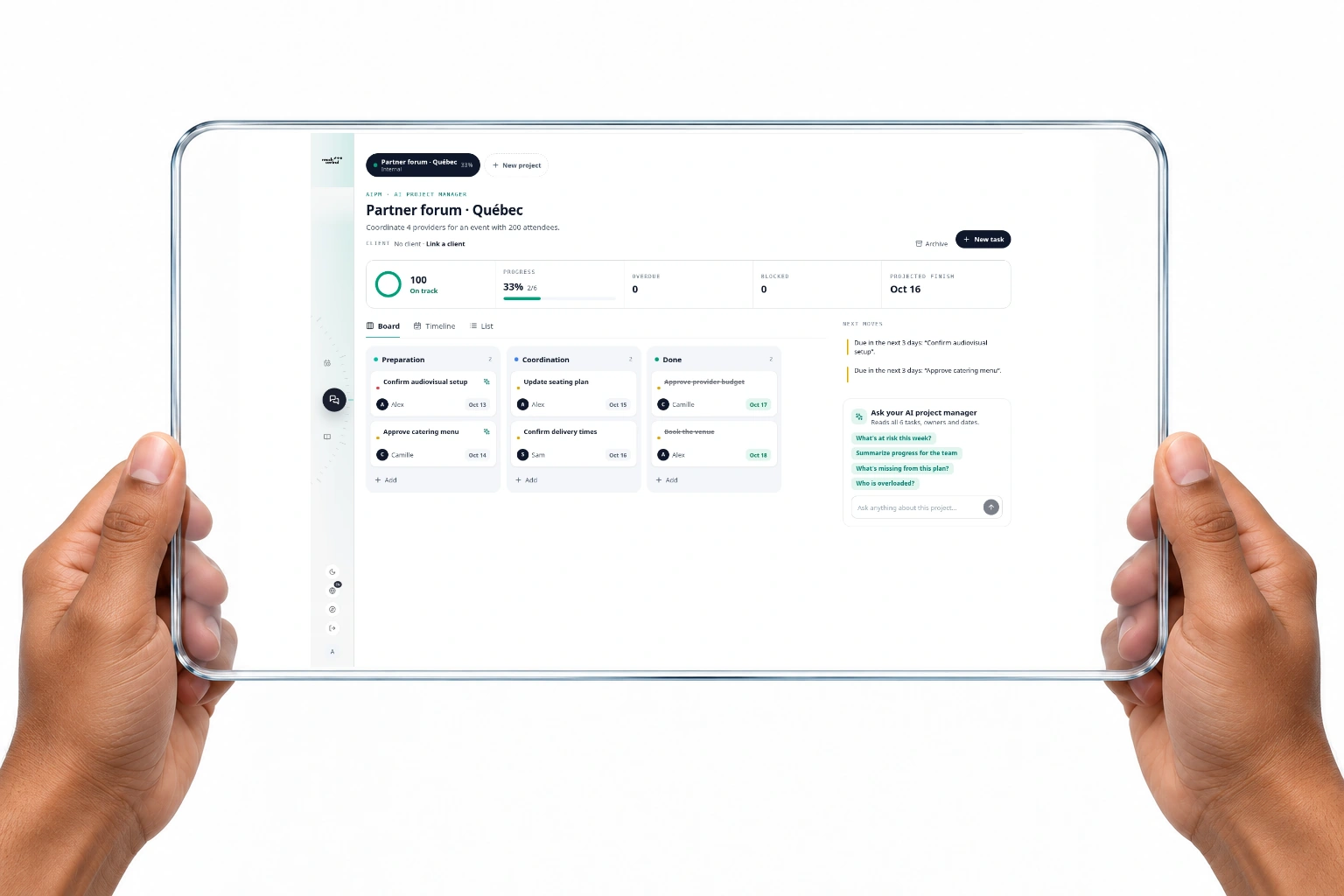
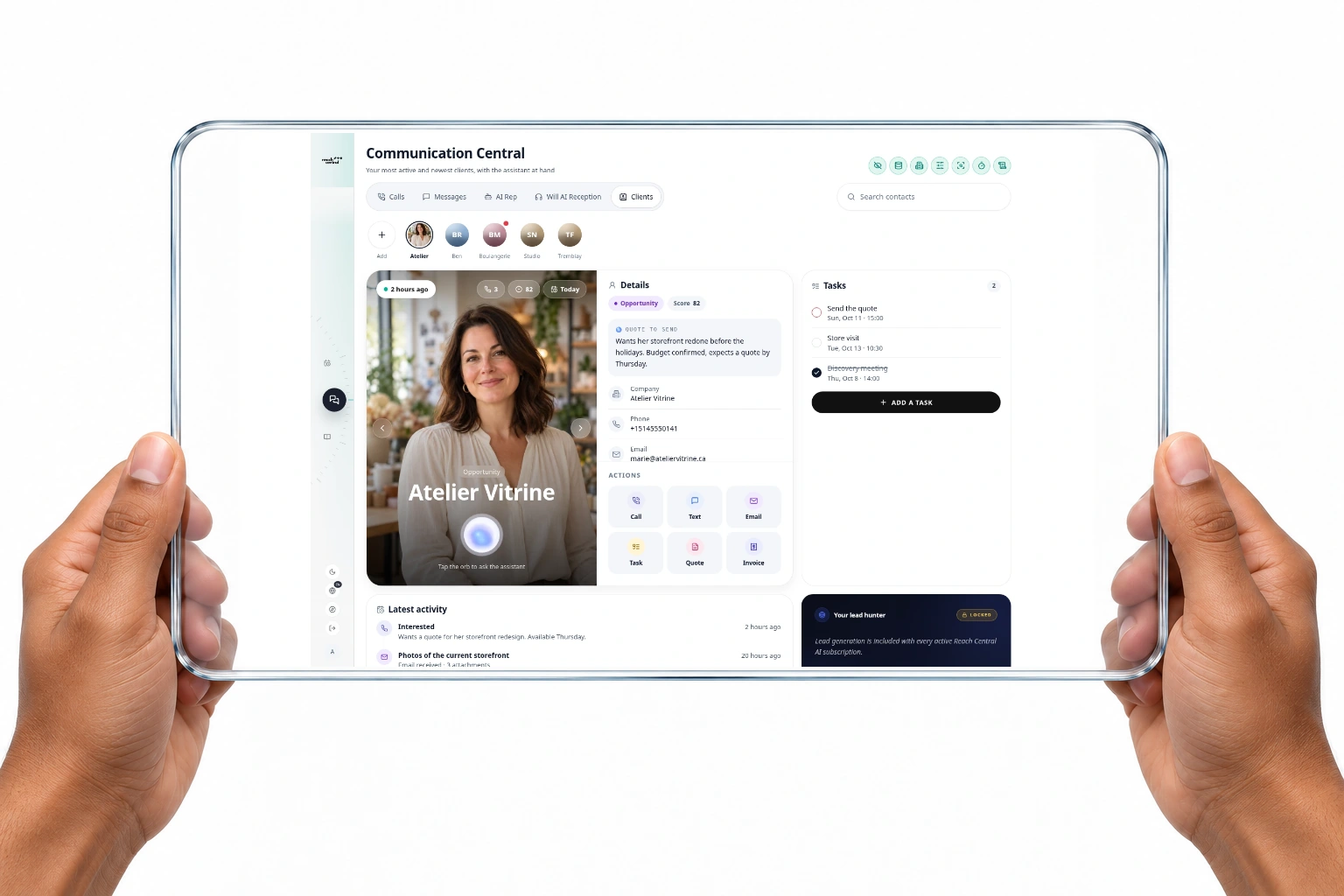
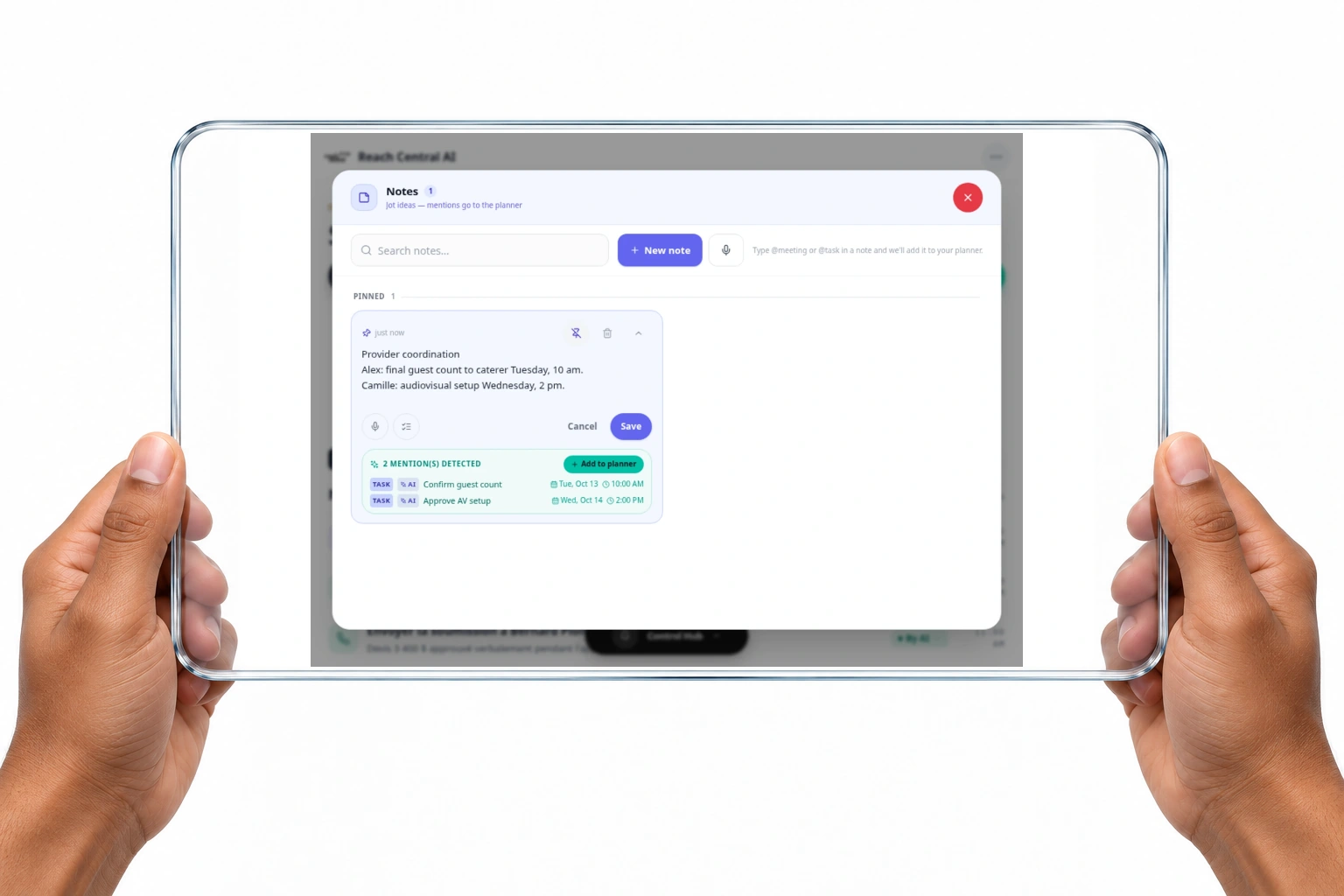
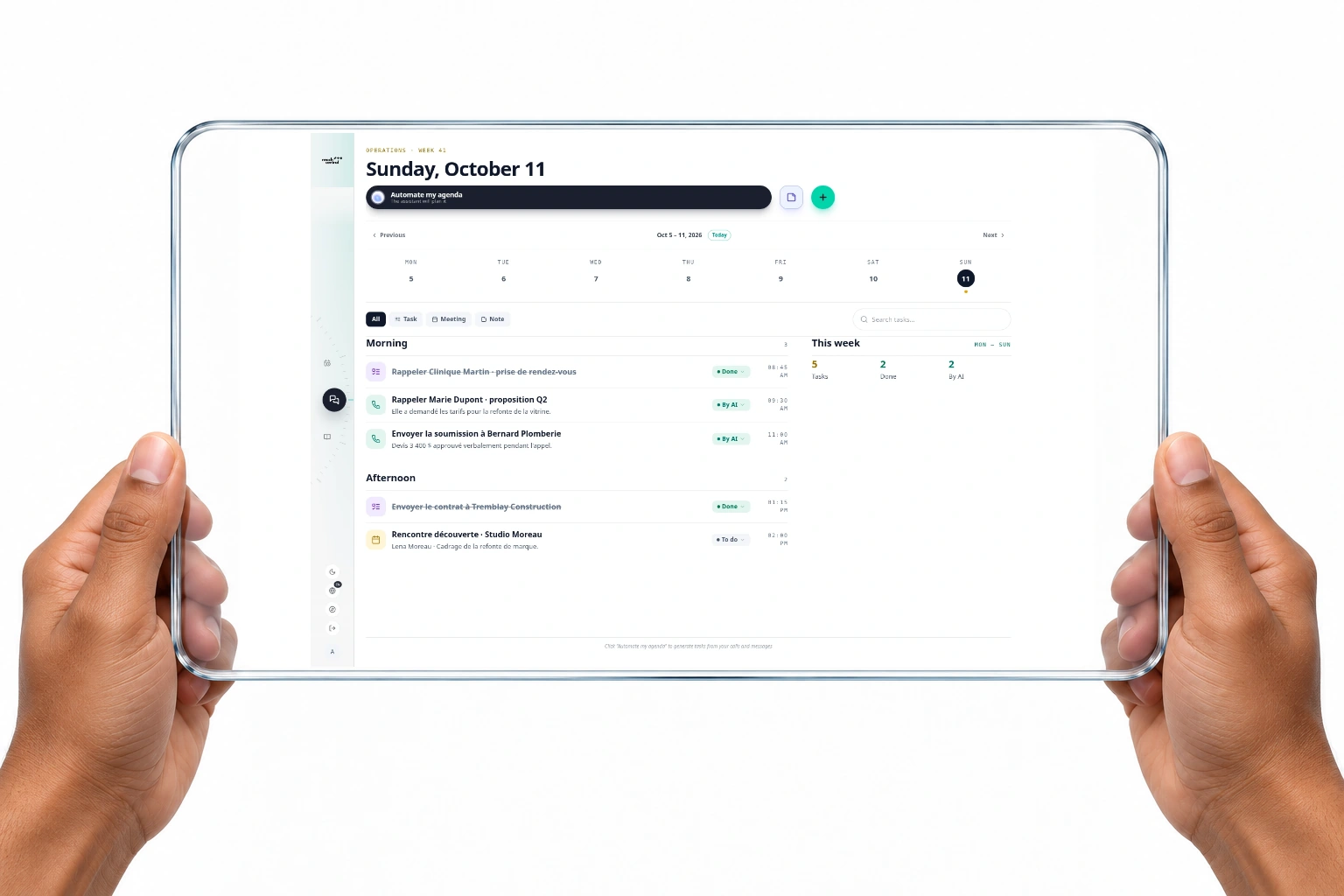
Current Reach Central AI interface · Sample data
The business: a small team, several moving parts
This Québec company organizes corporate events for approximately 100 to 300 attendees. Its initial team of eight employees also worked with contractors and coordinated up to four external providers for an event.
The same employees had to follow up with providers, clients and attendees while running the business. This case study focuses on provider management: keeping commitments, incoming modifications and follow-up actions connected as an event evolved.
The company, its employees, its providers and its clients remain anonymous.
Before: changes scattered across conversations and spreadsheets
Before Reach Central AI, provider information was spread across emails, calls, spreadsheets and WhatsApp. A commitment or change could arrive in one channel while the working update lived somewhere else.
The difficulty was the volume of coordination placed on a small team. Employees needed to keep track of changing requirements, follow up on commitments and reconcile updates across platforms while also handling clients, attendees and the business itself.
According to the supplied account, last-minute changes were difficult to track and some information slipped through. The problem was maintaining a reliable shared picture as work changed, rather than simply collecting more messages.
After: provider cards, specialist support and connected project work
The company used a client card for each provider as the shared reference for its information. The account describes transaction and communication history being logged there, including details of meetings arranged through Google Meet and Microsoft Teams.
It added an AI department expert to support provider follow-ups, note-taking and coordination of changes. The team also relied heavily on AIPM, Reach Central AI’s AI project management system, to organize event work.
This connected setup gave the team a common place to consult provider context and coordinate the work that followed. Provider records, AI specialist support and project planning became parts of the same working process.
The provider-management workflow
The company described a recurring workflow for provider commitments and changes. The following steps summarize how it uses provider cards, specialist support and project planning together.
01Keep a reference for each provider
The team uses a client card for each provider to centralize its information, transaction history and communications.
02Keep commitments and changes in context
Provider updates and meeting details become part of the shared history the team consults while coordinating the event.
03Use the AI specialist for follow-up support
The AI department expert supports provider follow-ups, takes notes and helps coordinate changes, according to the implementation account.
04Coordinate the resulting work in AIPM
The team relies on AIPM for project coordination alongside the provider cards and AI specialist, keeping project work connected to provider context.
Estimated coordination effort: about 60% to 40%
The team says it began noticing improvements during the first month. It estimates that the share of its work devoted to coordination and managing changes fell from approximately 60% to 40%. That is a decrease of 20 percentage points, which the team describes redirecting toward business growth. It later hired one additional employee focused on developing the business, rather than handling provider follow-ups.
The percentages are the company team’s estimates, reported in the interview, and were not measured from time records. They describe the team’s assessment of its own work, rather than a guaranteed result for another business. The business-development hire is a separately reported staffing decision; no audited cost savings were supplied.
The team’s perspective
Editorial summary of the implementation account supplied for this case study.
The benefit described was having more capacity to develop the business while keeping provider commitments and changes easier to coordinate. The team could put its next hire into business development instead of assigning that person to follow-ups.
Source, estimates and confidentiality
Reach Central AI prepared this article from a supplied implementation interview. Business and personal identities remain private. Workflow descriptions and hiring details are reported information. The coordination percentages are explicitly unmeasured team estimates, and improvements were reported as noticeable during the first month. The product showcase presents the current app interface with sample data. It does not show this company’s provider records. The notes view demonstrates AI-suggested tasks awaiting the user’s confirmation.
Questions about this case study
What kind of event company is described?
A Québec corporate event company with eight employees initially, supported by contractors. It organizes events for roughly 100 to 300 attendees and coordinates up to four external providers.
How are provider commitments and changes managed?
The company uses a client card for each provider, an AI department expert for follow-up and note-taking support, and AIPM for project coordination. The story describes their combined use in this company’s workflow.
Was the decrease from 60% to 40% measured?
No. These are estimates from the company’s team about the share of work devoted to coordination and changes. The difference is 20 percentage points. Improvements were noticed during the first month, but there are no time records establishing precise savings or a guaranteed result for another business.
Did the company hire another employee?
The supplied account describes one additional hire focused on business development, rather than provider follow-ups.
How does the team keep meeting context with provider information?
The implementation account describes communication history and details of meetings arranged through Google Meet and Microsoft Teams being logged with each provider’s information. The client card serves as the shared reference the team consults.
Explore the tools in this workflow
See the workflow with your own business in mind.
Book a demo to explore connected client cards, calls, follow-ups and project planning. Bring one workflow your team finds difficult to coordinate.
Book a free demo